Cyprus · groundworks
Groundworks in Cyprus.Compare several quotes at once.
Groundworks is the part of a Cypriot build with the widest gap between the estimate and the invoice, and almost all of that gap is rock. What is under your plot decides the foundation, the plant, the programme and the spoil bill, and it is the one thing you can establish before you commit.
- Registrations checked against source
- Coverage listed by district and town
- Trade categories mapped to the work itself
Groundworks companies in Cyprus
The ground decides everything above it
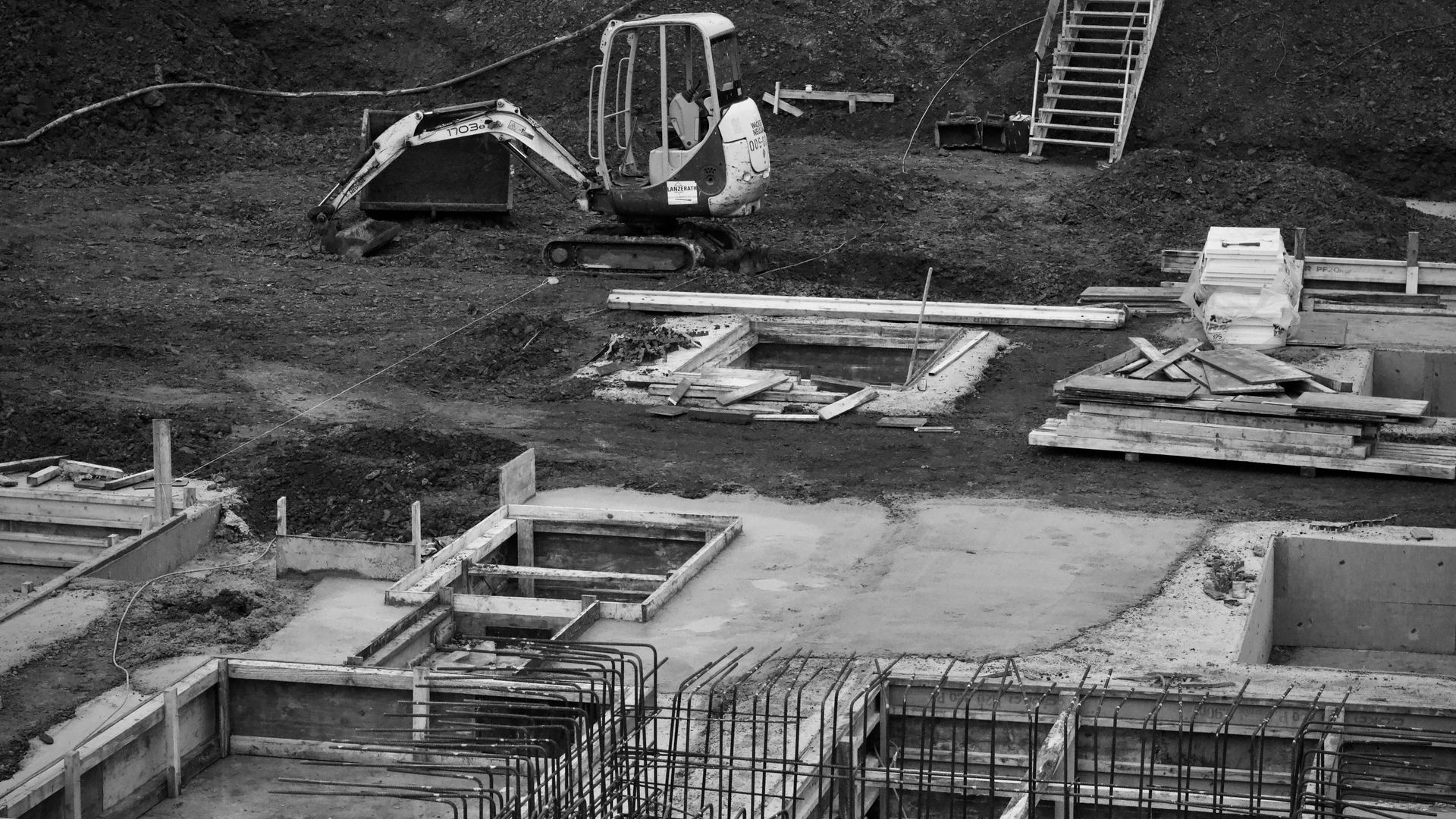
Groundworks covers site clearance, excavation, foundations, drainage below slab, retaining structures and the levels the building sits on. It is the first trade on site and the one whose surprises are hardest to absorb, because everything after it is waiting.
In Cyprus the surprise is almost always the same: rock, closer to the surface than anyone allowed for. The island's geology puts limestone, marl and havara under a great deal of buildable land, sometimes under a metre of soil, sometimes under a few centimetres. Excavating soil and breaking rock are different jobs with different plant and outputs that differ by an order of magnitude, and the point at which one becomes the other is where a groundworks budget stops being a budget.
Establish the ground before you take quotes
This is the single most useful thing you can do, and it is cheap relative to what it prevents.
Trial pits — a machine, half a day, a few holes at the corners of the footprint — tell you what is there and at what depth. On a sloping plot or one that has never been built on, your engineer may want more than that. The cost of finding out is small. The cost of not finding out is a variation priced without competition, agreed while a machine sits on hire.
With that information every contractor prices the same known ground, and the quotes become comparable. Without it, the lowest quote is usually the one that assumed the most optimistic conditions, which means it is the one most likely to grow.
Ask specifically what the quote assumes: the depth at which rock is expected, the proportion of the excavation assumed to be breaking rather than digging, and what the rate is if that proportion turns out to be wrong.
Slopes, and why they cost what they cost
A great deal of Cypriot residential land is on gradient — the hillsides behind Paphos and Peyia, the villages above Limassol, plots inland from the coast road almost everywhere.
Building on a slope means either cutting into it, filling out from it, or both, and each brings a retaining structure with it. Retaining walls are engineered elements, not garden features: they hold back a mass of ground that is trying to move, they need drainage behind them so water pressure does not do the pushing, and they are designed by the engineer rather than proposed by the builder.
Slopes also compound the access problem. Plant has to reach the excavation and lorries have to reach the plant, and a plot with a steep or narrow approach may only take smaller machines — which means more days for the same volume. Two identical houses, one flat and one on gradient, are not two similar groundworks jobs.
Some areas carry known ground movement history, and where that applies it governs the design rather than informing it. If your plot is in one, your engineer will already know; if you are choosing between plots, it is worth asking before rather than after.
Water, in three different forms
Water shows up in Cypriot excavations in ways that need telling apart, because the remedies differ.
A high water table, common in low-lying and coastal ground, is permanent. It changes the foundation design and it changes the waterproofing of anything below ground. It is not a problem to be pumped through; it is a condition to be designed for.
A perched layer sits on an impermeable band above the true water table and may appear in one trial pit and not the next. It usually wants drainage rather than redesign.
Surface run-off is your own excavation collecting the rain that used to run past it. Cyprus gets its rain in short heavy events, and an open excavation on a slope can take a season's worth in an afternoon. This is a programme and protection issue: cut off the run-off above the works, and do not leave an excavation open through a forecast.
Havara deserves particular mention here, because it softens when it gets wet and stays soft. Ground that was competent when it was opened can be unsuitable a week later if it has been rained on and left. Excavate close to when you are ready to pour, not when the machine happens to be available.
Drainage and services below the slab
Everything that has to pass under the building goes in during groundworks, and anything forgotten is either chased into the slab afterwards or lives without.
That means foul and surface water drainage with the correct falls, ducts for incoming electricity, water and telecoms, and any provision for future work — a duct to the boundary for a car charger, a route to the pool plant, a spare way for something not yet decided. Ducts are cheap while the ground is open and expensive afterwards, and the afterwards involves a breaker and a slab you have already paid for.
Soakaways, where used, need to be sized for the ground they discharge into. An impermeable marl will not take water at the rate a sandy soil will, and a soakaway that cannot discharge is a tank that fills.
Fill, compaction and the settlement nobody sees coming
Where the ground is cut on one side and built up on the other — which is most sloping plots — the built-up side is fill, and fill behaves like ground only if it is placed and compacted as though it were.
That means bringing it in layers of a specified depth, compacting each one before the next arrives, and using material that will compact rather than whatever happened to be excavated nearby. Spoil re-used on the plot is sensible economics, but only if it is suitable material and only if it is placed properly. Rock fragments tipped in bulk and levelled by a bucket leave voids that close later, and later means after the slab is on top.
Settlement in poorly placed fill is slow, uneven and effectively unfixable without taking up what sits on it. It shows in cracked screeds, doors that stop closing, and paving that develops a dip against the house. If your project involves any made-up ground, ask how the fill is specified, in what layer thickness it will go, and what compaction testing is proposed. The answer costs a paragraph in the quote and saves an argument two years out.
Setting out and levels
Groundworks establishes the position and height of everything that follows, and an error here is carried by every trade after it.
Setting out fixes the building on the plot against the boundaries and against the permitted drawings. On a Cypriot plot with a slope and a boundary wall, the two do not always agree as neatly as the drawing suggests, and the moment to discover that is before the foundations are cast.
Finished floor level deserves its own conversation. It governs the step at every external door, the fall on every terrace, and whether surface water in a heavy storm runs away from the building or into it. Getting it wrong by a small margin is remembered every time it rains.
What a groundworks quote should separate
Ask for these as distinct lines, because they move independently:
- Site clearance and setting out
- Excavation in soil, with the assumed volume
- Breaking and excavation in rock, with the assumed proportion and the rate beyond it
- Disposal of spoil, with the volume assumed and the facility named
- Foundations to the engineer's design, with concrete and reinforcement quantities
- Retaining structures, where any
- Below-slab drainage and ducting, itemised
- Working space, shoring and temporary support where excavations are deep or close to a boundary
The rock line and the disposal line are the two that grow. Having them separated is what lets you see whether a variation is genuine.
Who should be doing what
The foundation design belongs to a structural engineer registered with ETEK, and on a permitted project their involvement is not optional. The groundworks contractor builds what is designed. When those two roles blur — when the person digging is also deciding how deep to go and what to put in the hole — you have lost the check that the whole arrangement exists to provide.
Get the ground investigated, get the foundation designed against what was found, and get the excavation priced against the same information everybody else is pricing against. Groundworks rewards that sequence more than any other trade on a Cypriot site, because it is the one where the unknown is literally underneath you.
Common questions
- Why do Cypriot groundworks quotes vary so much?
- Because the contractors are pricing different assumptions about the ground, not different rates for the same work. Excavating soil and breaking rock are separate activities with separate plant and wildly different outputs per day, and a plot can turn from one into the other a metre down. Until somebody has established what is there, every quote is an estimate of a guess.
- What is havara and why does it matter?
- Havara is the compacted chalky marl found widely across Cyprus. It sits between soil and rock in behaviour: firmer than most contractors expect to dig by hand, softer than the rock a breaker is hired for, and prone to softening if it is left open to water. It is workable ground, but it wants deciding on before the plant arrives, because the machine that suits it is not the machine that suits either neighbour on the scale.
- Do I need a ground investigation for a house?
- For anything with a permit and an engineer, the engineer will tell you what they need, and on a sloping or previously undeveloped plot the answer is usually yes. Trial pits are inexpensive relative to what they prevent. The alternative is discovering the ground conditions with an excavator on hire and a foundation design that no longer suits them.
- What foundation types are used in Cyprus?
- Strip and pad footings on competent ground, rafts where loads need spreading or ground is variable, and piles where neither works — deep fill, poor ground, or a slope that has to be founded below the moving layer. Cyprus is a seismic zone and the foundation is engineered for that, which is why this is a decision for your structural engineer and not for the groundworker with the machine.
- How is spoil removal priced?
- By volume, carried by a licensed carrier to a licensed facility, and it is a larger share of a Cypriot groundworks bill than most people expect. Rock broken out occupies more volume than it did in the ground, so the lorry count rises faster than the hole gets deeper. Ask whether spoil can be re-used on the plot for levelling, because every cubic metre that stays is a cubic metre nobody carries away.
- What happens if we hit water?
- It depends on whether it is a high water table, a perched layer or surface run-off finding the excavation, and the three have different answers. Near the coast and in low-lying ground a permanent water table changes the foundation and the waterproofing. Get it identified rather than pumped, because pumping treats the symptom for exactly as long as the pump runs.
01Before you call anyone
Getting groundworks rightstarts before the first quote.
Four things decide whether the quotes you get back are comparable at all.
Define the scope in writing
Two quotes for “the same job” usually are not. Write down the area, the finish and what is being removed before you ask.
Step one
Check the registration
Registration is a document, not an opinion. Every listing here shows what we could verify and what we could not.
Documents
Compare like for like
Ask each company to price the same written scope. A cheaper number for a smaller job is not a saving.
Same scope
Agree the payment stages
Stage payments tied to completed work protect both sides. A large deposit before anything starts protects one.
In writing

Need groundworks?One form. Up to five quotes.
Describe the job once and we will gather quotes from companies that actually do this kind of work.